
Why Website Updates Don’t Show Up Right Away: A Simple Guide to CDN Caching
Why website changes don’t always appear instantly.
This is something almost every client runs into at some point, and once you understand how caching works, it all makes a lot more sense.
What Is a CDN and Why Does It Matter?
Modern websites use something called a Content Delivery Network (CDN). In simple terms, a CDN stores copies of your website’s files in multiple places to help it load faster.
Those places include:
-
Your hosting server (GoDaddy, Bluehost, Network Solutions — the part we can control)
-
Internet Service Providers (ISPs) like Comcast or Verizon (the part we cannot control)
-
Your personal devices (computers, phones, tablets)
Because your website exists in all these locations at once, updates need time to reach every layer.
What Happens When I Update Your Website?
When I make a change, I immediately clear the cache on the hosting server. This tells the CDN and ISPs that new files are available.
However, ISPs don’t always update their cached copies right away. Some refresh quickly, while others can take up to 48 hours to catch up. That delay is completely normal — and completely out of our control.
The Final Step: Your Device Cache
Even after the hosting server and ISPs update, your own device may still be showing an older version of the site.
To see the latest changes, you may need to:
-
Clear your browser cache
-
Try a different browser
-
Check from another device
This last step is often the missing piece. Many clients don’t realize their device is still holding onto old files.
You’re Not Alone — This Happens to Everyone
Caching issues are one of the most common points of confusion in web development. Nothing is broken — it’s just the nature of how modern websites deliver content quickly and efficiently.
And of course, if you ever have questions or want me to double‑check something, I’m always here to help.

Unleashing the Power of Hashtags: Elevate Your Business on Social Media
In the ever-evolving landscape of digital marketing, hashtags have transcended their origins on Twitter and become ubiquitous across major social media platforms. From Facebook and Google Plus to Instagram and Pinterest, hashtags have woven themselves into the fabric...
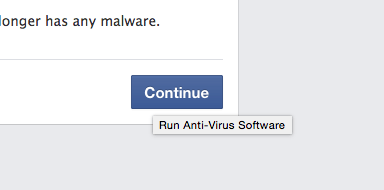
Facebook wants to remotely scan my harddrive
Facebook Scam Perpetrated by Facebook Facebook Has Gone Too Far! Earlier today I got bumped out of Facebook with the following warning: I then immediately quit all of my running software on my Mac and ran virus protection software: ClamAV / AdwareMedic; Malware...